“De-risking installation of next-generation noise mitigation technology for offshore wind.”
Project Summary
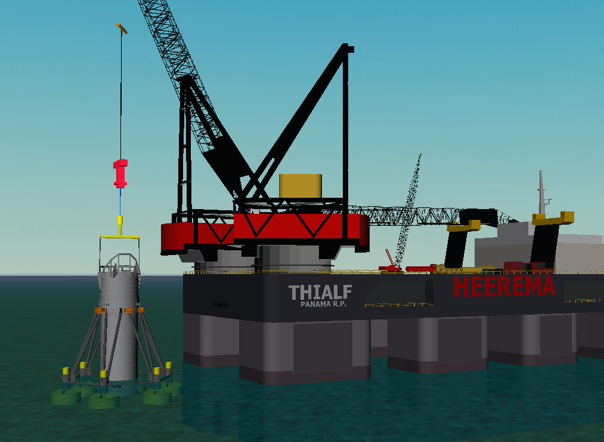
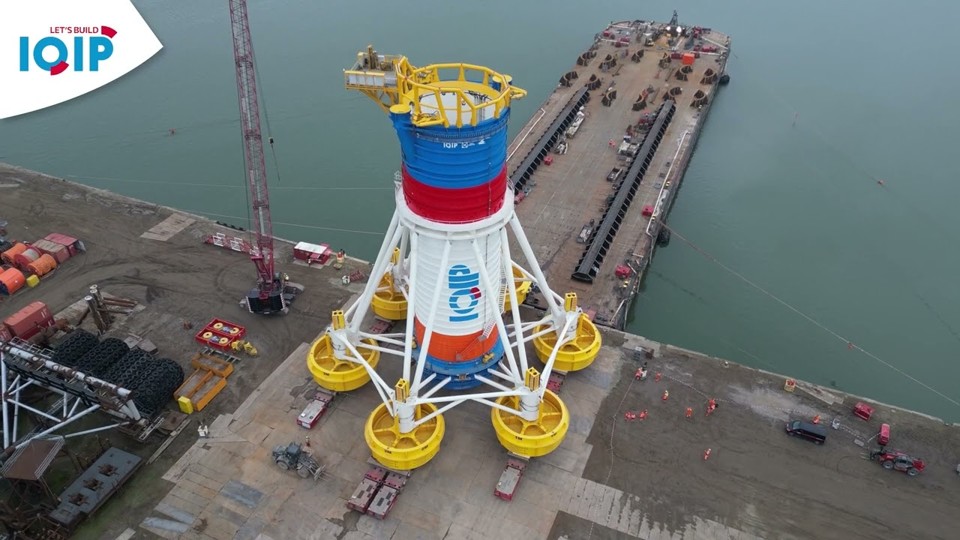
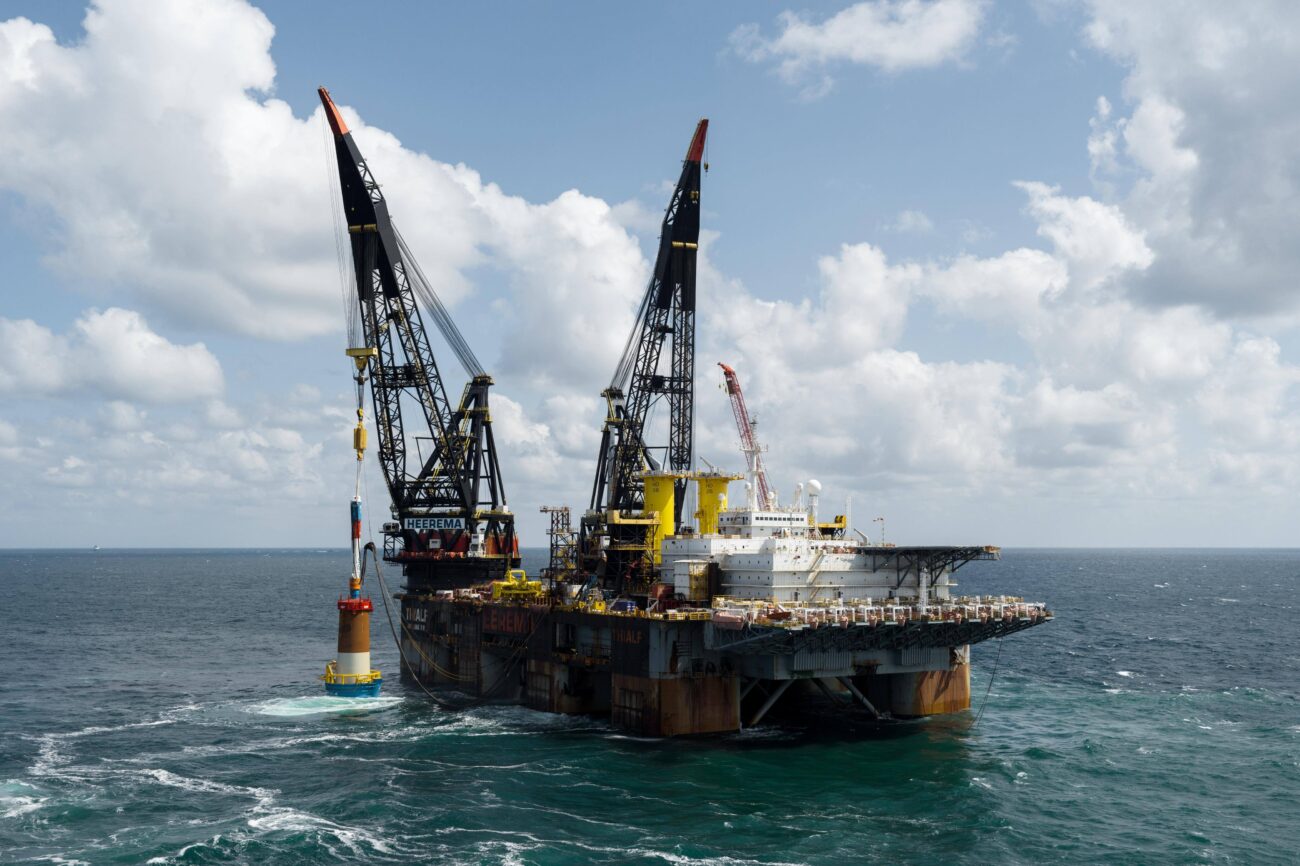
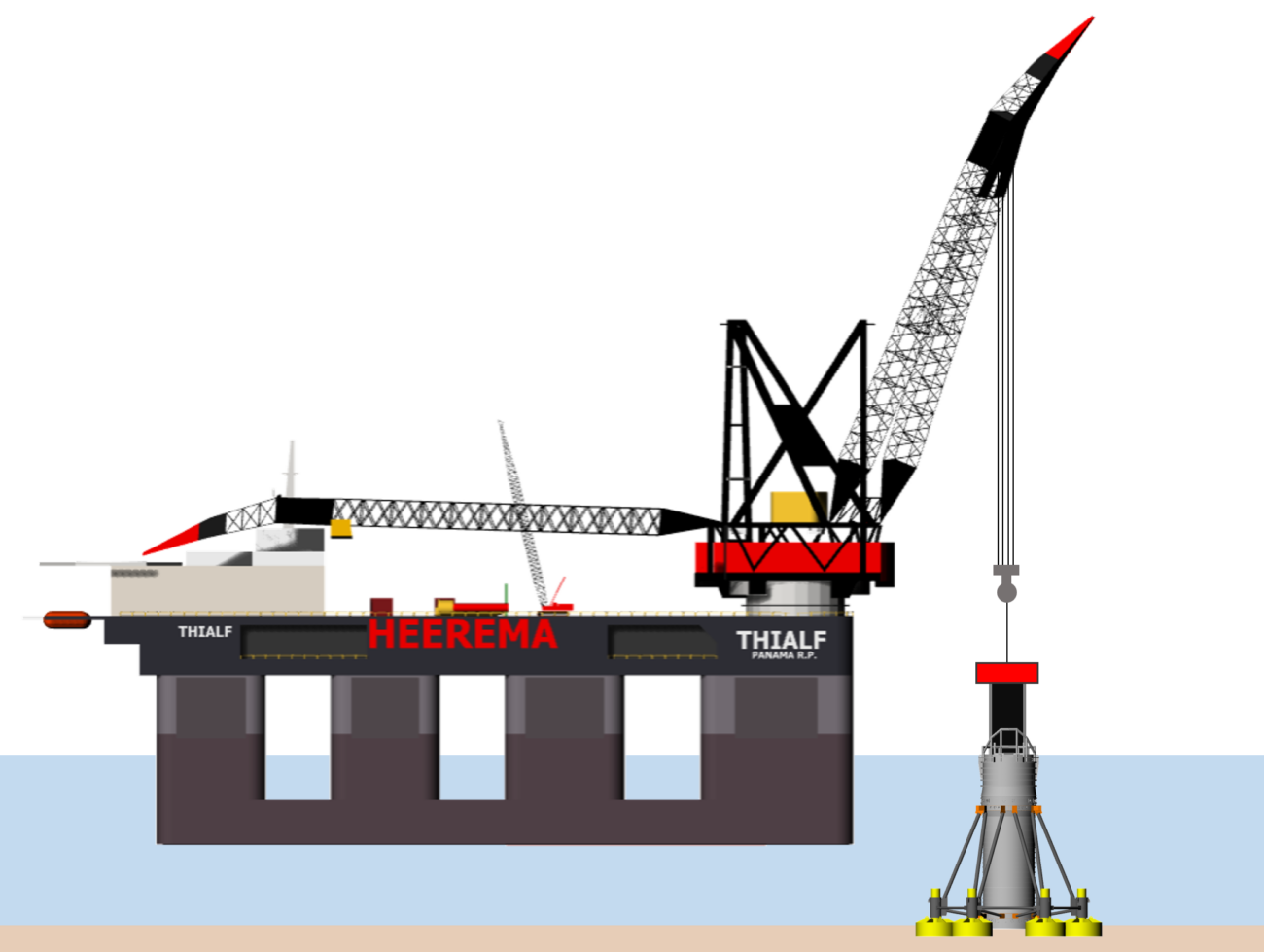
TADEK was approached to model and simulate the overboarding and installation of a 2500t Noise Mitigation System (NMS-T-10000), designed to reduce waterborne noise by approximately 15 dB during monopile installation.
The Challenge
Installation required proving controlled behaviour of a 2500t coupled offshore system under defined environmental limits, with uncertainty in hydrodynamic response and structural interaction.
- Crane operability constrained by wire angle limits up to Hs 3m
- Splash-zone and overboarding dynamics driving peak responses
- Uncertain contact loads between NMS and template structures
- Tight tolerances for monopile positioning
- Requirement for independent verification by Heerema
TADEK‘s Role
TADEK owned the hydrodynamic modelling and installation assessment required to define system behaviour, loads, and operational limits.
- Developed full-system hydrodynamic model and RAOs
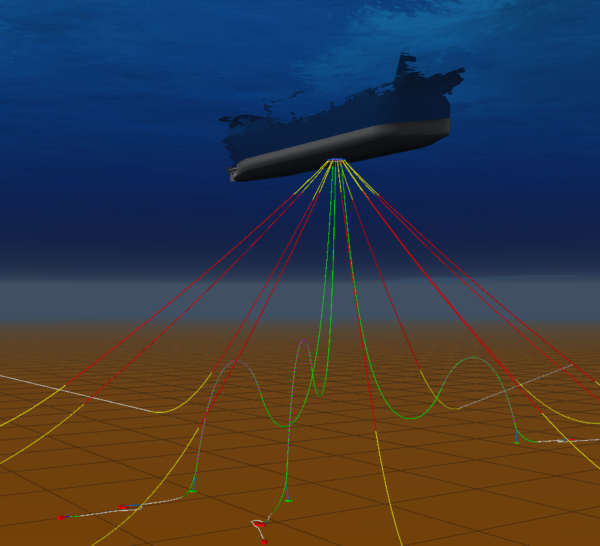
- Performed time-domain motion and installation analysis
- Assessed crane wire angles and operability limits
- Defined contact loads for fendering and structural interfaces
- Calculated rigging loads and Dynamic Amplification Factors (DAFs)
- Delivered verified inputs to support design and installation decisions
Our Approach
A validated modelling approach was used to reduce uncertainty and define governing system behaviour under installation conditions.
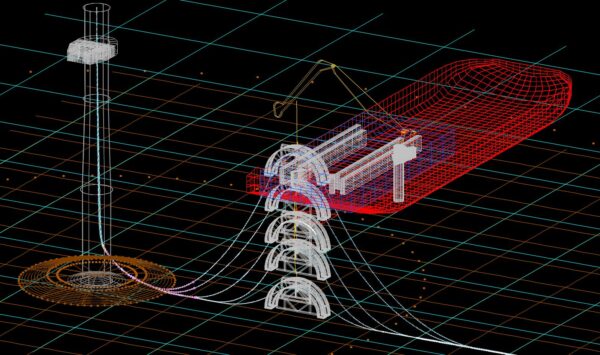
- Built a fully coupled OrcaFlex model including hydrodynamic and contact effects
- Calibrated numerical response against Heerema tank test data
- Identified governing environmental conditions and response drivers
- Quantified extreme and operational load cases for design input
- Incorporated design updates, including mud mat optimisation, into analysis
Outcomes
The work established verified installation limits and design loads, enabling confident execution and progression to fabrication.
- Installation feasibility demonstrated within crane limits up to Hs 3m
- Numerical model validated against physical tank testing
- Governing load cases defined for fendering and structural design
- Hydrodynamic loading reduced through informed design refinement
- Results accepted by Heerema and IQIP for design use
- Installation risk reduced through quantified and validated analysis