⚓ In naval architecture, some of the most critical inputs to our work are also some of the hardest to define with confidence.
Viscous damping is a good example. It can have a significant influence on predicted vessel motions, yet values are often derived from empirical methods such as Ikeda and Chakrabarti — well-established approaches but ultimately based on experimental data and approximations.
🔬So, we decided to put them to the test ourselves.
Led by our Hydrodynamics Technical Authority, Dr Daniela Benites, and Naval Architect Etienne Martin, our Ship Scientist summer intern Kiera Beerstecher spent three months developing the tank test plan and building three physical models representing different vessels.
The team then carried out a series of decay tests, allowing us to measure viscous damping directly and compare our experimental results with the empirical methods we routinely use.
💡 This is the kind of engineering culture we want to encourage: questioning assumptions, testing established methods and continually building our knowledge from first principles.
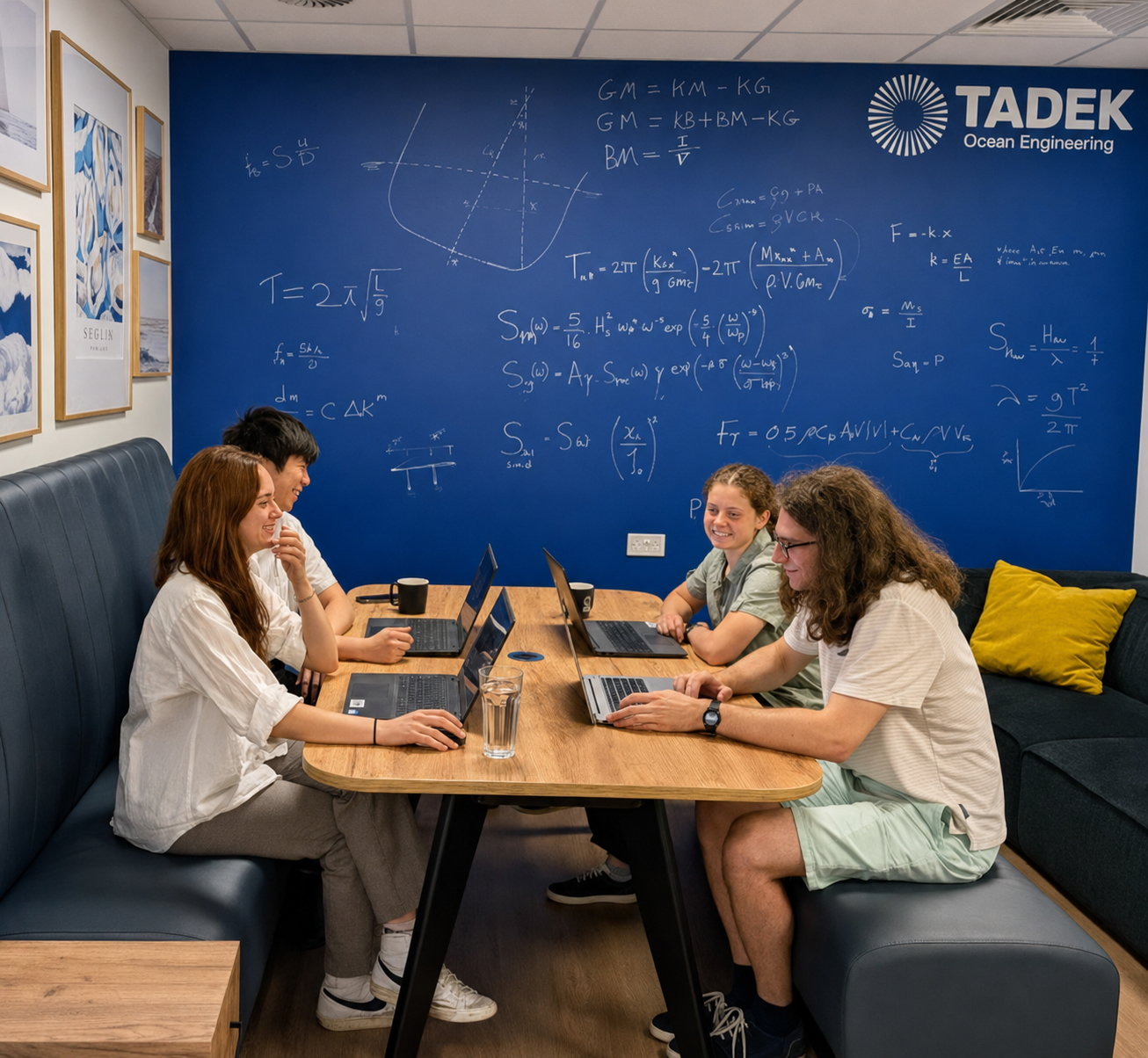
And it provided a great reason to bring the wider team together — to discuss what we learned, share other technical work from across the business, and step back to question our wider business and communication processes: what works, what doesn’t, and how we can improve the way we work together.
Then, with the serious work done, we continued the conversations over some food and drinks.
🚀 A team day built around curiosity, challenge and continually getting better at what we do.