Project Summary
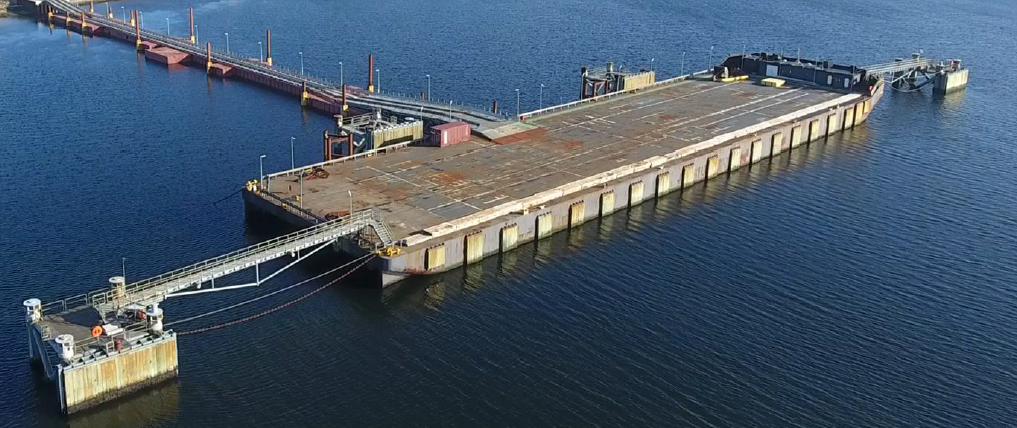
TADEK delivered detailed structural analysis and design optimisation for Green Marine’s hinge interfaces between a barge and linkspan, resolving localised overstress through iterative FEA, revised loading, and practical hinge redesign to achieve a robust and buildable solution.
The Challenge
The hinge-to-hull interface required verification under high applied loads, within tight geometric constraints:
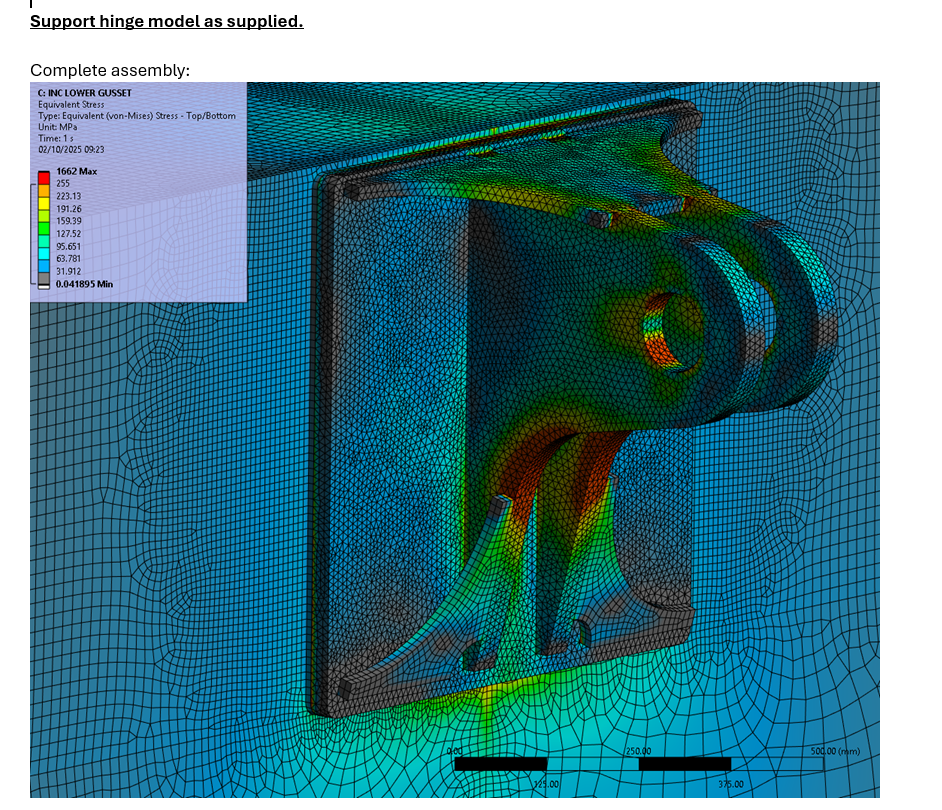
- Localised stress concentrations at hinge interface regions
- Load transfer into areas with limited structural stiffening
- Geometric constraints restricting hinge configuration options
- Requirement to satisfy both ultimate strength and fatigue criteria
TADEK‘s Role
TADEK acted as the structural consultant, providing independent verification and design direction through:
- Assessing structural adequacy of hinge-to-hull interface
- Interrogating client-supplied models and loading assumptions
- Defining acceptable stress limits and performance criteria
- Directing design changes required for compliance
Our Approach
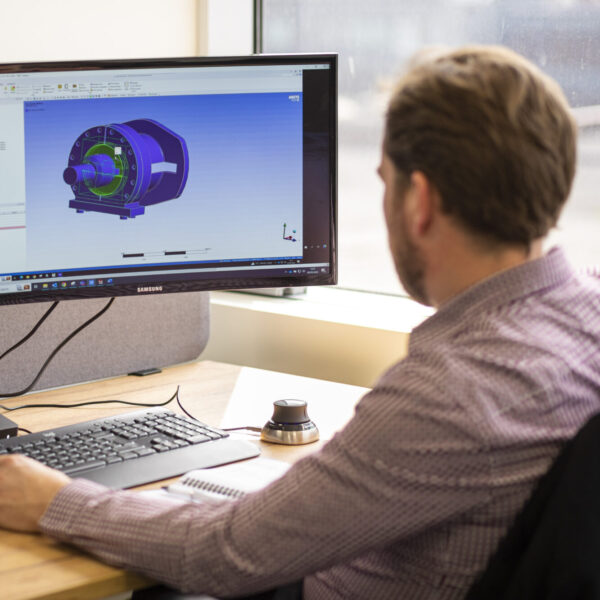
A progressive analysis strategy was used to accurately resolve local structural behaviour. This was achieved through:
- Transitioning from global FEA to high-resolution local sub-modelling
- Incorporating revised load cases reflecting realistic operating conditions
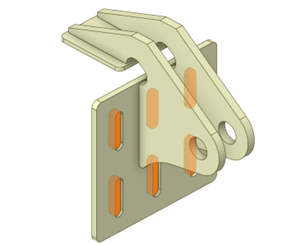
- Modelling hinge geometry in detail to capture load paths
- Evaluating multiple design iterations against strength and fatigue criteria
Outcomes
The final solution provided a compliant and implementable hinge design. This resulted in:
- Stress levels reduced to within acceptable limits for design loads
- Service stresses maintained below fatigue endurance threshold
- Load transfer redirected into more effectively stiffened regions
- A practical design achieved within existing geometric constraints